
Animation Techniques
Cuphead's animation is a masterclass in recreating the look and feel of 1930s cartoons. This archive examines the techniques that bring the game's hand-drawn world to life.
The game uses traditional hand-drawn animation, with every frame drawn on paper and then inked and colored digitally. The style draws heavily from Fleischer Studios and Disney's early works, emphasizing rubber hose limbs, surreal transformations, and watercolor backgrounds. This page curates key techniques as numbered exhibits, each with annotations and visual examples.
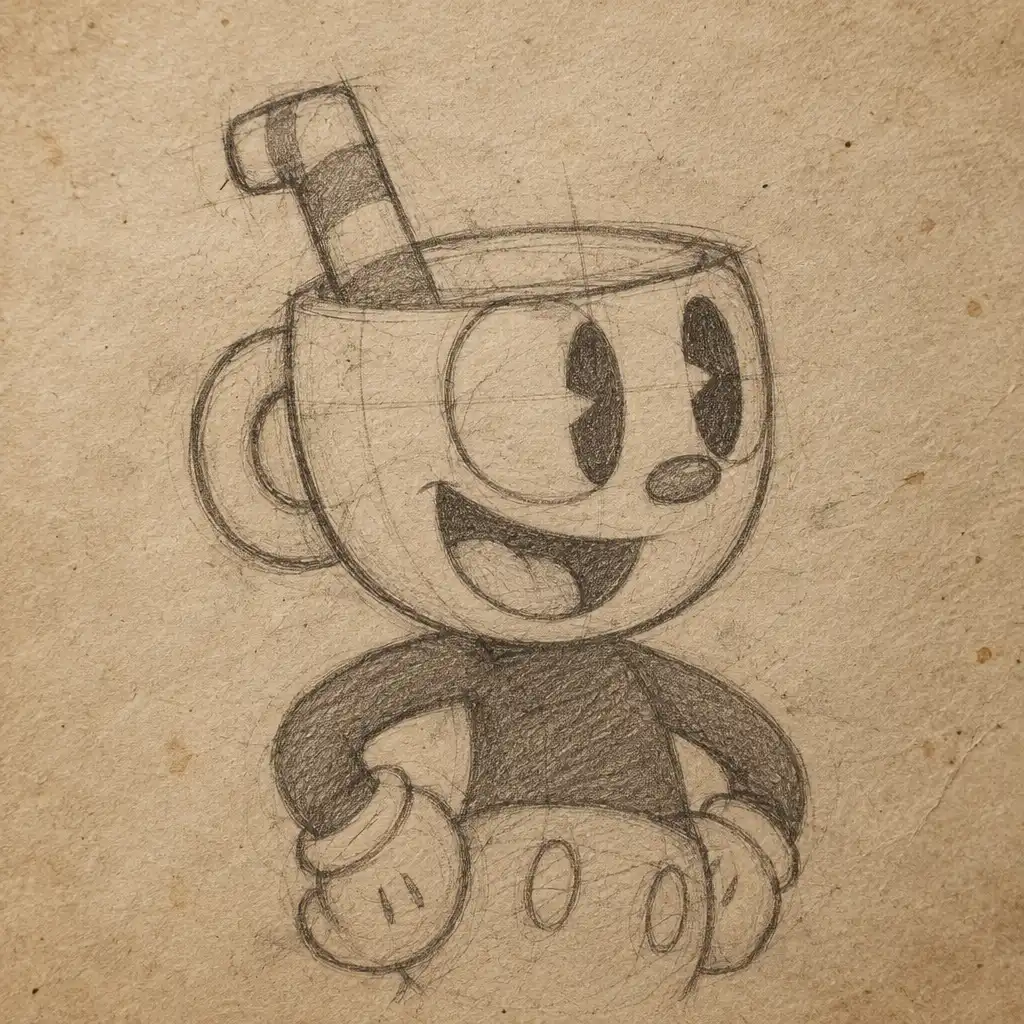
The Hand-Drawn Process
From Pencil to Pixel
Cuphead's animation begins with traditional pencil drawings on paper. Each frame is drawn by hand, then inked and colored digitally to preserve the organic feel of classic cartoons. The developers at Studio MDHR drew over 50,000 frames of animation for the game. Each character animation was first sketched in pencil, then cleaned up and inked using a custom digital pipeline that mimics traditional cel painting. The team used a technique called 'boiling' where lines are intentionally left slightly unstable to create a hand-drawn wobble, adding to the vintage feel.
Watercolor Backgrounds
Painting with Pixels
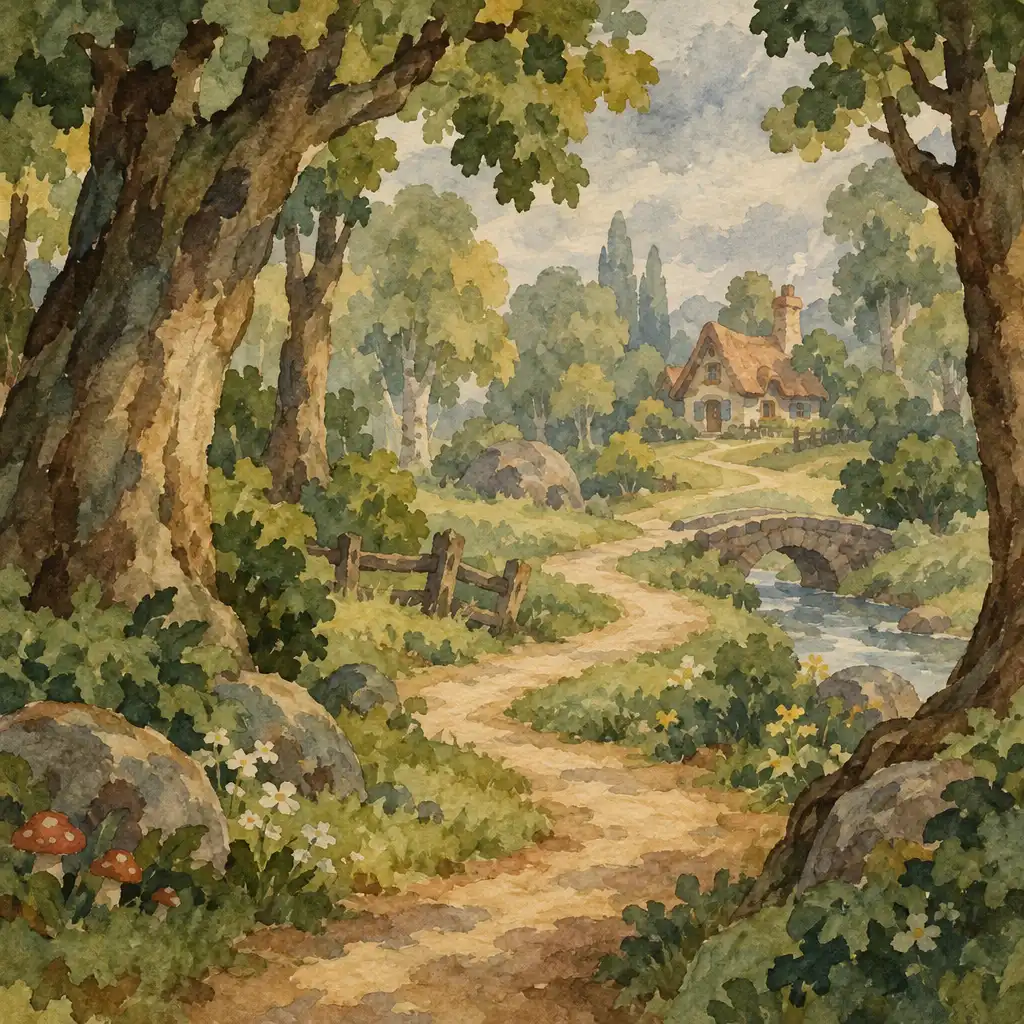
Cuphead's backgrounds are painted in a watercolor style, with soft edges and translucent washes. The developers used a combination of traditional watercolor paintings scanned into the game and digital painting techniques to achieve this effect. Many backgrounds were first painted with real watercolors on paper, then scanned at high resolution. The digital versions were carefully retouched to maintain the texture and color bleeding of traditional watercolor. The backgrounds are static, but they are designed to complement the animated characters, creating a cohesive visual world.
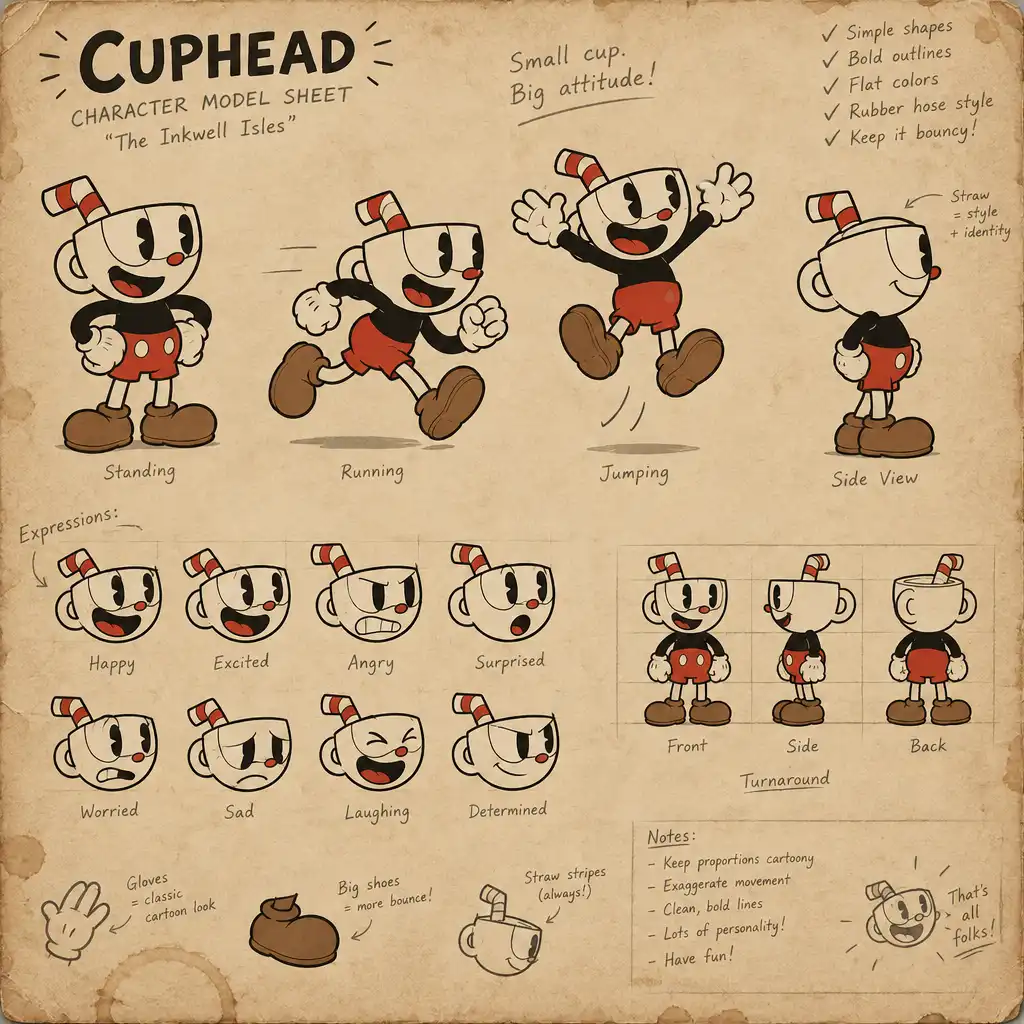
Character Design and Rubber Hose Style
The Rubber Hose Aesthetic
Cuphead's characters are designed in the rubber hose style, characterized by limbs that lack joints and bend in smooth, continuous curves. This style was prevalent in early animation and gives the characters a bouncy, surreal quality. Rubber hose animation was popular in the 1920s and 1930s because it was easier to animate than realistic jointed limbs. In Cuphead, the style is exaggerated to emphasize the game's cartoonish violence and transformations. Characters like Cuphead and Mugman have simple, iconic designs with large heads and expressive eyes, making them instantly recognizable.
Squash and Stretch
Exaggerating Motion
Squash and stretch is a fundamental animation principle where objects deform to emphasize motion and impact. In Cuphead, this is used extensively in character actions, from jumping to shooting, to make the gameplay feel dynamic and responsive. When Cuphead jumps, his body stretches vertically; when he lands, he squashes down briefly. Bosses often squash and stretch dramatically during attacks, making their movements feel powerful and unpredictable. The technique adds a layer of physical comedy to the game, enhancing the cartoon feel.
Cel Animation and Digital Inking
From Cels to Code
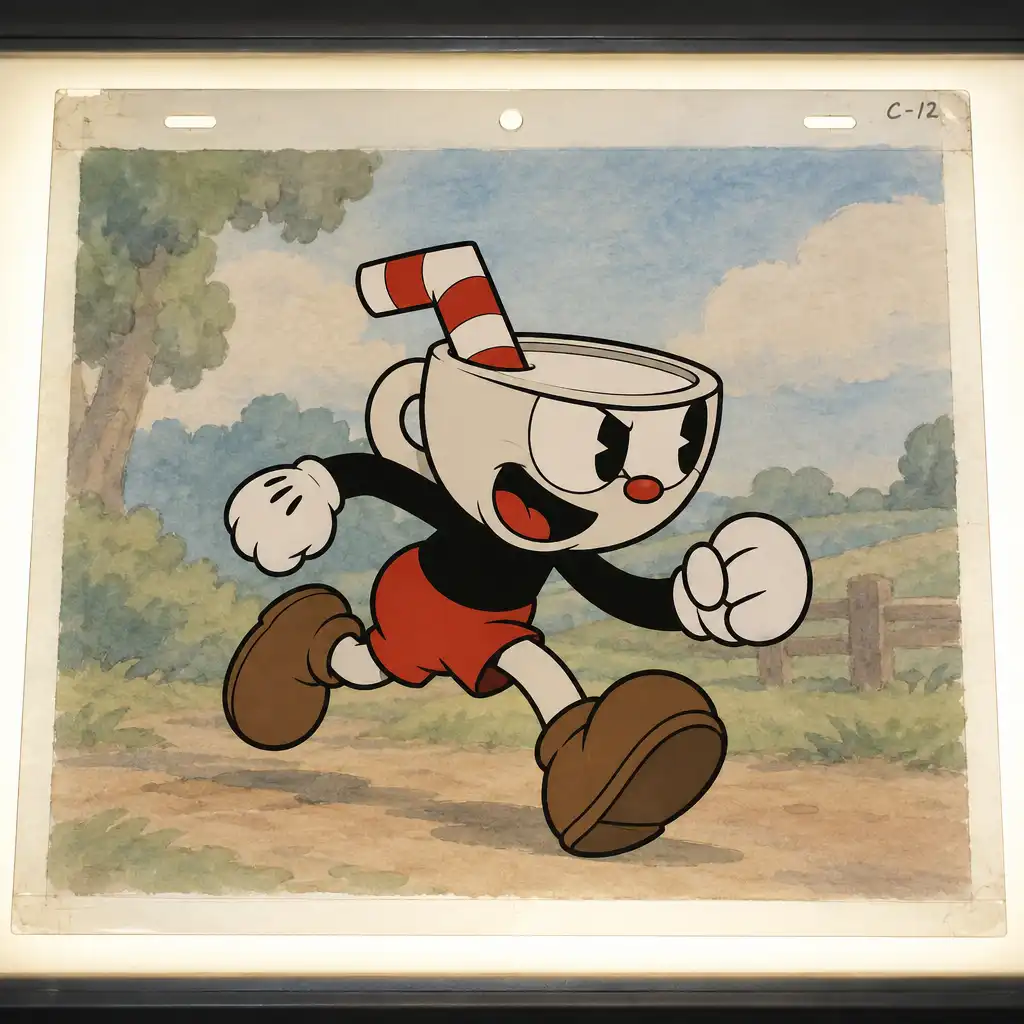
Traditional cel animation involved drawing characters on transparent celluloid sheets and layering them over painted backgrounds. Cuphead replicates this process digitally, with each frame drawn and colored to mimic the look of cels. The developers used a custom tool that allowed them to draw and color frames in a way that simulates the cel painting process. The digital cels are then composited over the watercolor backgrounds, preserving the layered look of traditional animation. This approach ensures that the characters have crisp outlines and flat colors, typical of cel animation.
Limited Animation and Efficiency
Smart Reuse
Limited animation involves reusing frames and simplifying movements to reduce the number of drawings needed. Cuphead employs this technique strategically, reusing cycles for repetitive actions like running or idle animations. Idle animations often loop a small number of frames to create a breathing effect. Run cycles may reuse the same leg movements with slight variations. This approach allowed the small development team to create a large amount of content without sacrificing the overall quality.
Animation Timeline
Key Milestones
The animation of Cuphead draws from a rich history of 1930s cartoons. This timeline highlights key influences and development milestones.
-
1930s
Fleischer Studios and Disney produce groundbreaking cartoons with rubber hose animation and watercolor backgrounds.
-
2010
Studio MDHR begins development of Cuphead, inspired by these classics.
-
2013
The game is announced, showcasing its unique hand-drawn animation.
-
2017
Cuphead is released, receiving acclaim for its animation.
-
2022
The Delicious Last Course DLC adds new animated content.
Technical Challenges and Solutions
Overcoming Obstacles
Creating a game with traditional animation presented numerous technical challenges, from managing the large number of frames to ensuring smooth performance across platforms. The game's file size is large due to the high-resolution hand-drawn assets. The developers had to optimize the animation to run at 60 frames per second on consoles and PC. They developed custom tools to streamline the animation pipeline, allowing for efficient production.
Summary and Google Play Search
The Art of Cuphead
Cuphead's animation is a remarkable achievement that faithfully recreates the look and feel of 1930s cartoons. Through hand-drawn frames, watercolor backgrounds, and rubber hose character design, the game stands as a testament to the enduring appeal of traditional animation. The techniques discussed include hand-drawn process, watercolor backgrounds, character design, squash and stretch, cel animation, limited animation, and technical solutions. These techniques combine to create a visually stunning and nostalgic experience.
This button opens Google Play search results for Cuphead in a new tab. It does not guarantee an official Android release; results may vary.